
Innovative Wireless Power Beaming Technology Revolutionizes UAV Operations
Key Takeaways
- Wireless power beaming technology enhances UAV operational efficiency.
- Reach Power and UNL collaborate under AFWERX for innovative solutions.
- This technology addresses critical communication needs for military use.
- Potential for widespread applications in Southeast Asia's drone market.
- UAVs equipped with wireless power can remain airborne longer.
Understanding Wireless Power Beaming
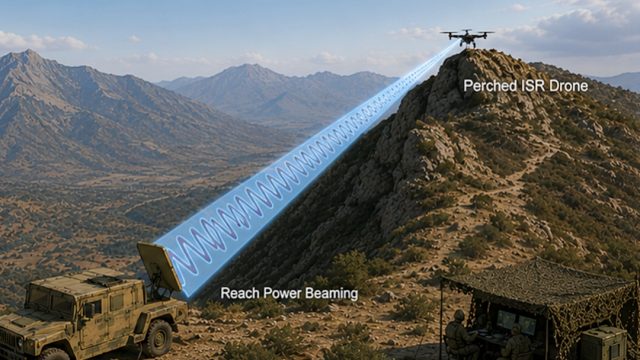
In the evolving landscape of drone technology, wireless power beaming is emerging as a groundbreaking solution that offers significant advancements in the operational capabilities of unmanned aerial vehicles (UAVs). This cutting-edge technology, which allows drones to receive power without physical connections, can substantially address limitations faced by traditional battery-operated drones.
Collaboration for Innovation
Recently, Reach Power joined forces with the University of Nebraska-Lincoln’s NIMBUS Lab, backed by the United States Air Force's AFWERX initiative. Their collaboration focuses on leveraging wireless power beaming to create “perched drones” capable of persistent communication and intelligence, surveillance, and reconnaissance (ISR) operations. This approach is particularly vital for military applications, where constant connectivity and operational duration are paramount.
Why This Matters Now
As the geopolitical landscape shifts, there is an increasing demand for advanced communication technologies, especially within the Department of the Air Force. The ability to maintain drone operations over extended periods without the need for frequent recharging is becoming critical. The wireless power beaming technology can directly counteract these challenges by enabling drones to stay airborne longer while reducing logistical burdens.
Market Implications for Southeast Asia
The implications of wireless power beaming technology extend beyond military applications. In the rapidly growing drone market of Southeast Asia, particularly within Indonesia and the broader ASEAN region, the potential for commercial applications is substantial. Industries ranging from agriculture to disaster management can benefit from enhanced drone capabilities.
Enhancing Agricultural Efficiency
For instance, Indonesian farmers can utilize drones equipped with wireless power beaming to monitor crop health or deliver supplies without interruptions. With the ability to maintain flight for extended periods, these drones can cover larger areas and perform more complex tasks, significantly enhancing agricultural efficiency.
Disaster Management Innovations
Moreover, during disaster response scenarios, drones equipped with wireless power can provide real-time data and communication support to rescue teams in remote areas. The ability to operate without the constraint of battery life can lead to quicker, more effective responses to natural disasters such as earthquakes and floods.
Challenges and Future Considerations
While the prospects of wireless power beaming are exciting, several challenges remain. Regulatory hurdles, technological limitations, and the need for infrastructure to support widespread adoption will require concerted efforts from governments and private sectors alike. Nevertheless, as Southeast Asia embraces digital transformation, investment in such innovative technologies could position the region as a leader in drone applications.
Investment and Development
Countries like Indonesia are already witnessing growth in their UAV markets, driven by government initiatives and private sector investment. By incorporating advanced technologies such as wireless power beaming, these nations can enhance their operational capabilities and achieve significant competitive advantages on the global stage.
Conclusion
The collaboration between Reach Power and the University of Nebraska-Lincoln represents a significant leap forward in drone technology. With the potential to revolutionize how UAVs operate, especially in critical military and commercial environments, wireless power beaming is set to change the game. As Southeast Asia continues to grow as a hub for drone innovation, embracing this technology could unlock unprecedented opportunities across various sectors.
 Elevating the Wedding Industry
Todd Monken's Emotional Outbur
Colombia Earthquake: A Tragic
Innovative Electronic Warfare
Elevating the Wedding Industry
Todd Monken's Emotional Outbur
Colombia Earthquake: A Tragic
Innovative Electronic Warfare